
Turning Your Jewelry Vision Into a Tangible Reality
Every remarkable piece of jewelry begins the same way — as an idea. Maybe it's a sketch on a napkin, a mood board pinned to your wall, or simply a feeling you want to express through metal and stone. But transforming that spark of inspiration into a physical sample you can hold, wear, and sell? That journey is called jewelry prototyping, and understanding it can save you time, money, and a great deal of frustration.
Whether you're an independent jewelry designer launching your first collection, a retailer looking to create exclusive private-label pieces, or an established brand scaling up production, knowing the prototyping process gives you a serious competitive advantage.
Step 1: Concept Development and Technical Drawing
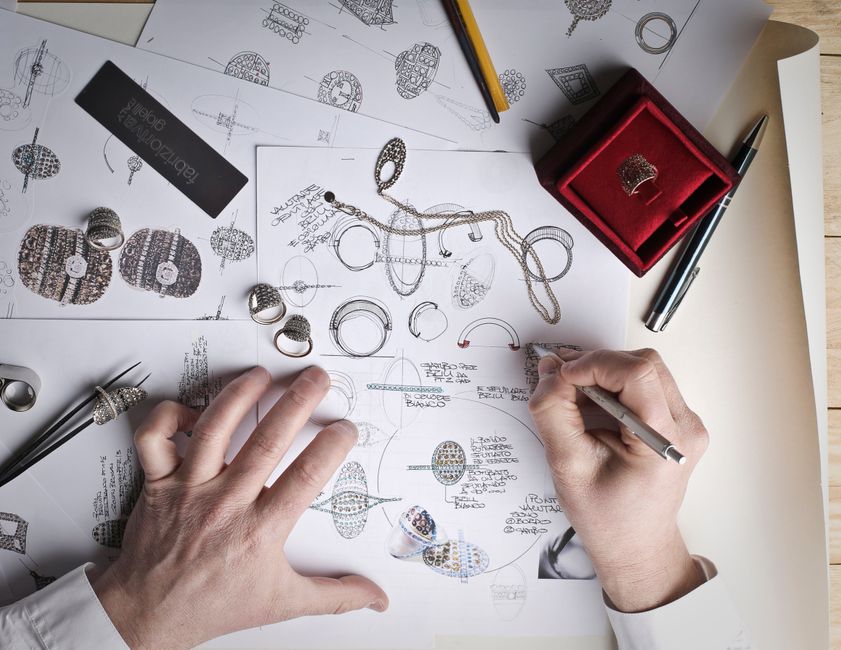
Before any software opens or any metal melts, your idea needs structure. A skilled designer will work with you to translate your vision into a technical brief — defining dimensions, stone sizes, metal type, and finishing requirements. Reference images, hand sketches, and even physical inspiration pieces all help at this stage.
The more clearly you can communicate your concept, the faster and more accurately the team can bring it to life. Don't worry if you're not a technical person — that's exactly what an experienced manufacturing partner is there for.
Step 2: CAD Jewelry Design — Building It in 3D
Once the brief is solid, a CAD (Computer-Aided Design) specialist models your piece digitally using professional jewelry software such as JewelCAD, Rhino, or Matrix. This is where your concept becomes a precise, rotatable 3D model you can view from every angle before a single gram of metal is used.
CAD jewelry design for custom pieces is one of the most valuable steps in the entire process. It allows you to:
- Spot design issues before production begins
- Check stone settings and proportions accurately
- Request revisions quickly and cost-effectively
- Approve a photorealistic render before committing to physical production
"A well-built CAD file doesn't just create one piece — it becomes a permanent digital asset you can use to reorder, resize, or modify your design for years to come."
Step 3: 3D Printing the Prototype
With an approved CAD file in hand, the next step is 3D printing a resin model of your piece. High-resolution jewelry 3D printing produces an incredibly detailed physical prototype that shows you exactly how the finished piece will look and feel in the hand.
This resin model is your first real-world checkpoint. You can assess the weight, scale, and overall aesthetic — and if something doesn't feel right, adjustments can be made to the digital file before any precious metal is involved. This stage dramatically reduces costly mistakes during final production.
Step 4: Casting and the First Metal Sample
Once the 3D-printed prototype is approved, it's used to create a mold for the casting process — typically lost-wax casting, one of the most trusted techniques in jewelry manufacturing. Molten metal (gold, silver, brass, or your chosen alloy) is poured into the mold, and after cooling and cleanup, your first metal sample emerges.
This sample then goes through finishing — filing, polishing, stone setting, and plating if required — until it matches your intended design exactly. This finished sample becomes your master piece, the approved standard against which all future production items are measured.
Practical Tips for a Smoother Prototyping Process
- Be specific about stone sizes early: Stone dimensions directly affect prong placement, bezel depth, and overall proportions in the CAD stage.
- Request a render before 3D printing: A photorealistic render is a quick, low-cost way to catch major issues.
- Budget for at least one revision round: It's rare that a first prototype is perfect — plan for it.
- Keep your CAD files: Always ensure you receive your final CAD files as part of your agreement with your manufacturer.
Ready to Start Your Jewelry Prototyping Journey?
At JewelCAD Design Ltd in Bangkok, we guide designers, brands, and retailers through every stage of the jewelry prototyping process — from initial concept and CAD design to 3D printing, casting, and your finished first sample. Our experienced team works with clients worldwide, combining decades of craftsmanship with the latest digital manufacturing technology.
If you're ready to bring your jewelry idea to life, we'd love to hear from you.