
What Is Lost Wax Casting in Jewelry Manufacturing?
Lost wax casting — known in the trade as investment casting — is one of the oldest and most reliable methods for producing high-quality metal jewelry. At JewelCAD Design Ltd in Bangkok, we use this time-tested process combined with modern CAD technology to bring intricate jewelry designs to life with remarkable precision. Whether you're an independent jewelry brand or a retailer commissioning a custom collection, understanding how lost wax casting works will help you communicate better with your manufacturer and make smarter design decisions.
Step 1: Creating the Master Model with CAD Design
Every great casting begins with a great design. Using professional jewelry CAD software such as JewelCAD Pro or Rhino with RhinoGold, our designers build a precise 3D digital model of your piece. This stage is critical — the CAD file determines every dimension, stone seat, surface detail, and wall thickness of the final product. Working in CAD also allows us to catch structural problems before any material is used, saving time and cost down the line.
"A well-built CAD file is the foundation of a successful casting. Garbage in, garbage out — as we always say in the workshop."
Step 2: 3D Printing the Wax or Resin Model
Once the CAD design is approved, we output it to a high-resolution 3D printer. For jewelry casting, we use either castable wax filament or photopolymer resin specifically formulated to burn out cleanly without residue. This is where modern technology dramatically improves on traditional hand-carving — our 3D printers achieve layer resolutions as fine as 25 microns, capturing every delicate texture and fine detail your design requires.
Step 3: Building the Wax Tree
Individual wax models are attached to a central wax rod called a sprue, forming what looks like a wax tree. This tree structure is important because it creates the channels through which molten metal will flow during casting. The placement of each piece on the tree affects how the metal fills the mold, so experienced technicians arrange the models carefully to ensure even flow and minimal porosity.
Step 4: Investment (Creating the Mold)
The wax tree is placed inside a metal flask and surrounded by a plaster-like material called investment powder mixed with water. Once poured, the investment sets firmly around every surface of the wax models, capturing even the finest details. This is where the process gets its name — the wax is truly "invested" inside a solid mold.
Step 5: Burnout — The Wax Is Lost
Here comes the defining moment. The flask is placed in a kiln and heated to temperatures between 700°C and 800°C. The wax melts and burns away completely, leaving behind a perfect negative cavity in the shape of your jewelry. The mold is now ready to receive molten metal. This is why it's called lost wax casting — the wax is intentionally and permanently destroyed.
Step 6: Metal Casting
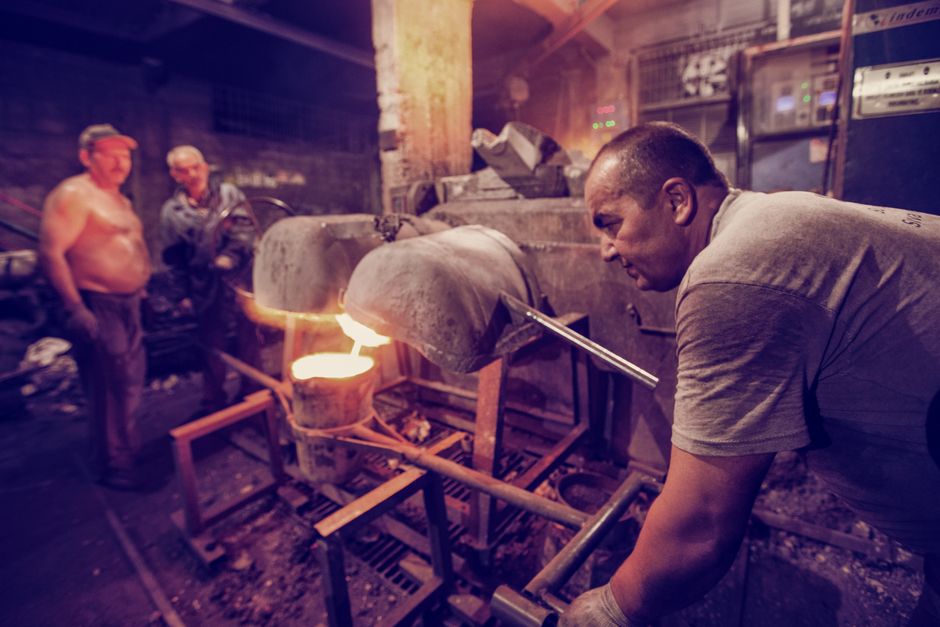
While the flask is still hot, molten metal — most commonly sterling silver, 18k gold, or brass — is injected or poured into the mold cavity under pressure using a centrifugal or vacuum casting machine. The heat of the flask prevents the metal from solidifying too quickly, allowing it to fill every corner of the mold cleanly.
Step 7: Quenching, Cleaning, and Finishing
Once the metal has solidified, the flask is quenched in water, causing the investment plaster to break apart and reveal the cast metal tree. Individual pieces are then cut from the sprue, filed, polished, and refined by our skilled bench jewelers. Stone setting, plating, and surface treatments are completed at this stage.
Practical Tips for Designers Working with Lost Wax Casting
- Maintain minimum wall thickness — for silver and gold, aim for at least 0.8mm to avoid thin spots that crack during casting.
- Design undercuts carefully — extreme undercuts can trap investment and cause porosity issues.
- Communicate your metal choice early — different metals shrink at different rates, which affects CAD sizing.
- Request a sample casting before committing to large production runs.
Why Choose Professional Lost Wax Casting Services in Bangkok?
Bangkok has long been recognized as one of the world's premier jewelry manufacturing hubs, offering skilled craftsmanship at competitive pricing. At JewelCAD Design Ltd, we combine traditional casting expertise with cutting-edge CAD and 3D printing technology to deliver consistent, high-quality results for designers and brands worldwide. Whether you need a single prototype or a full production run, our end-to-end lost wax casting service covers every step from digital design to finished, hallmarked jewelry.
Ready to bring your jewelry design to life? Contact our Bangkok workshop today to discuss your project requirements.